
School Dog - Middi
Middi
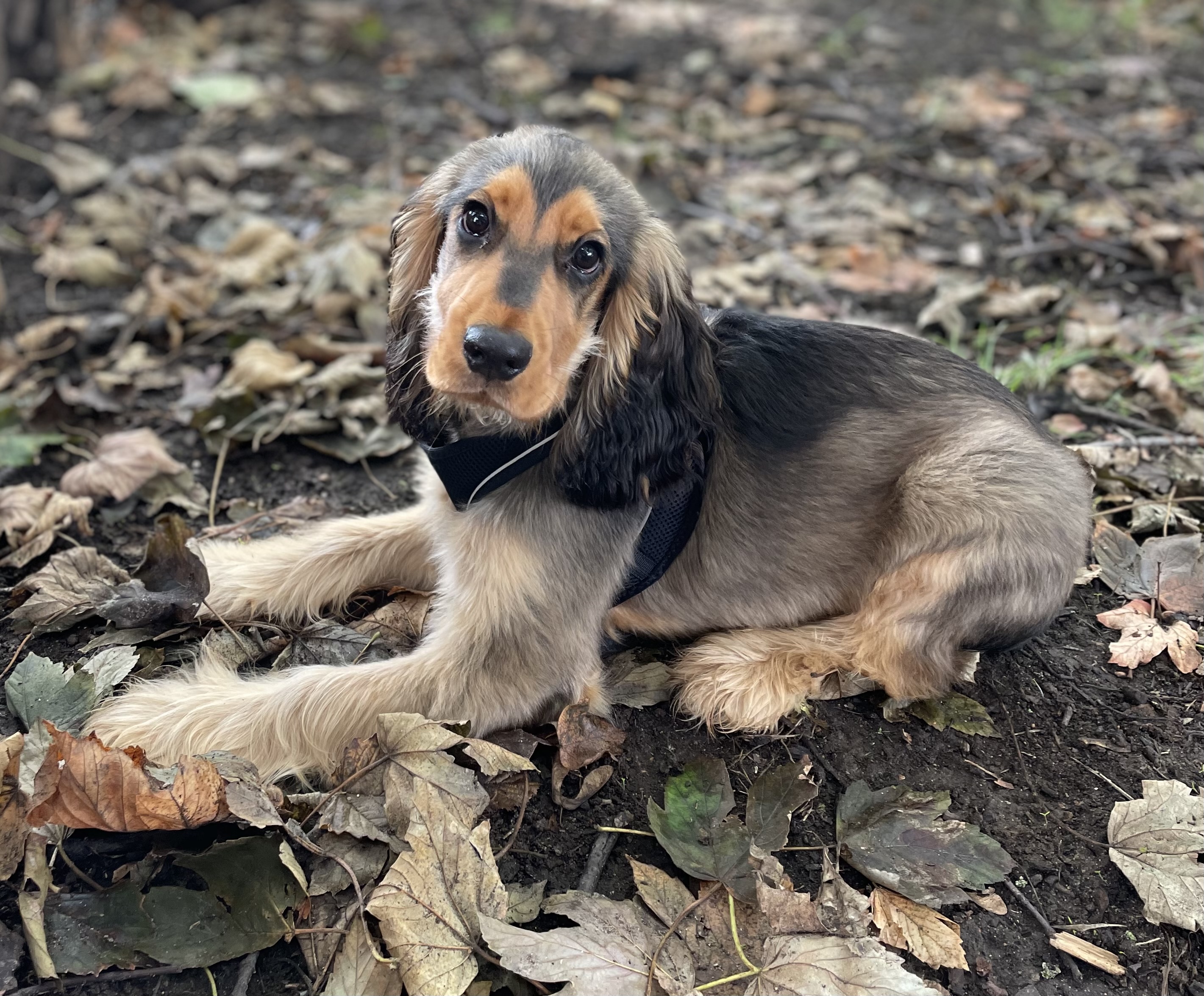
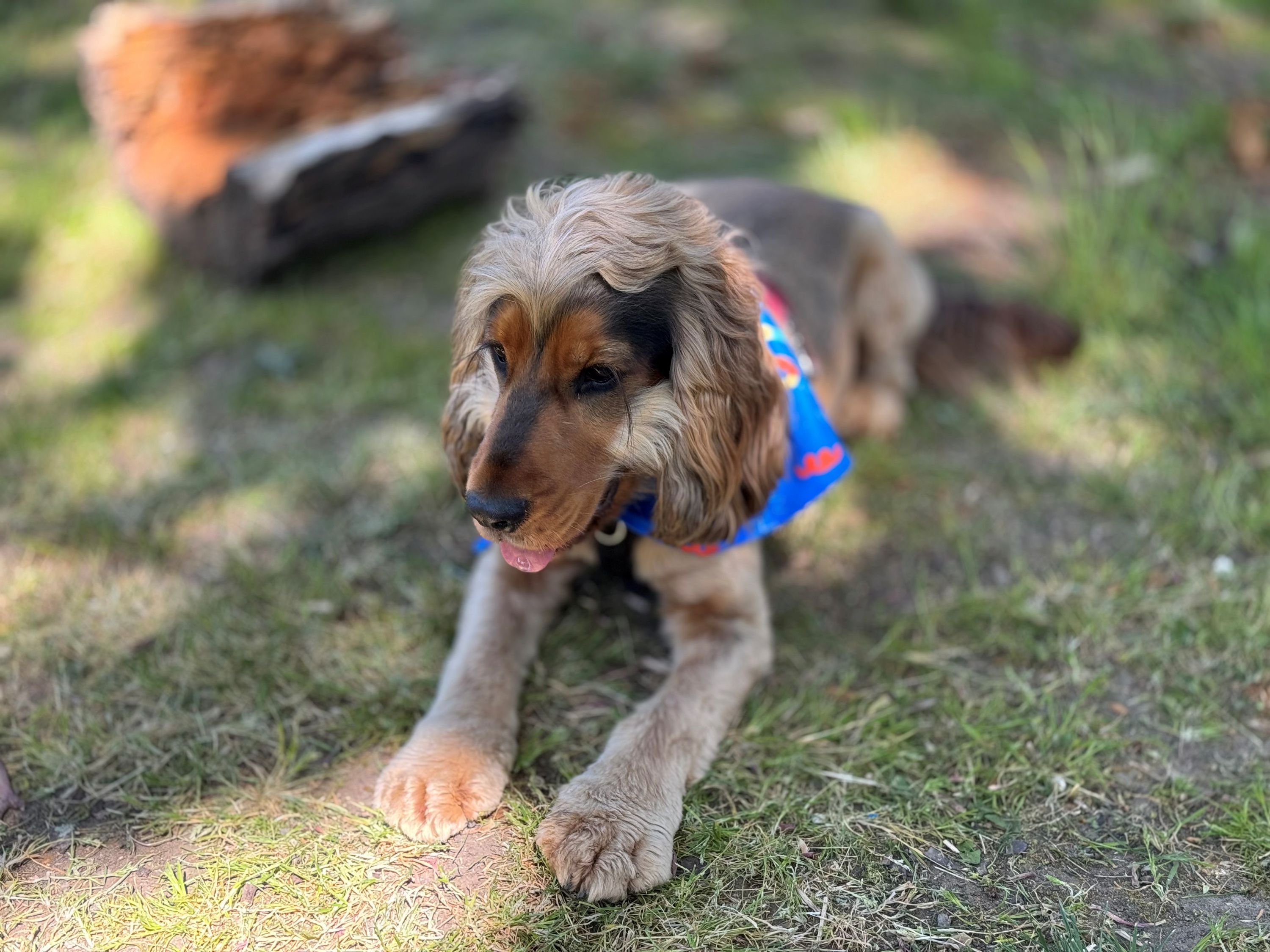

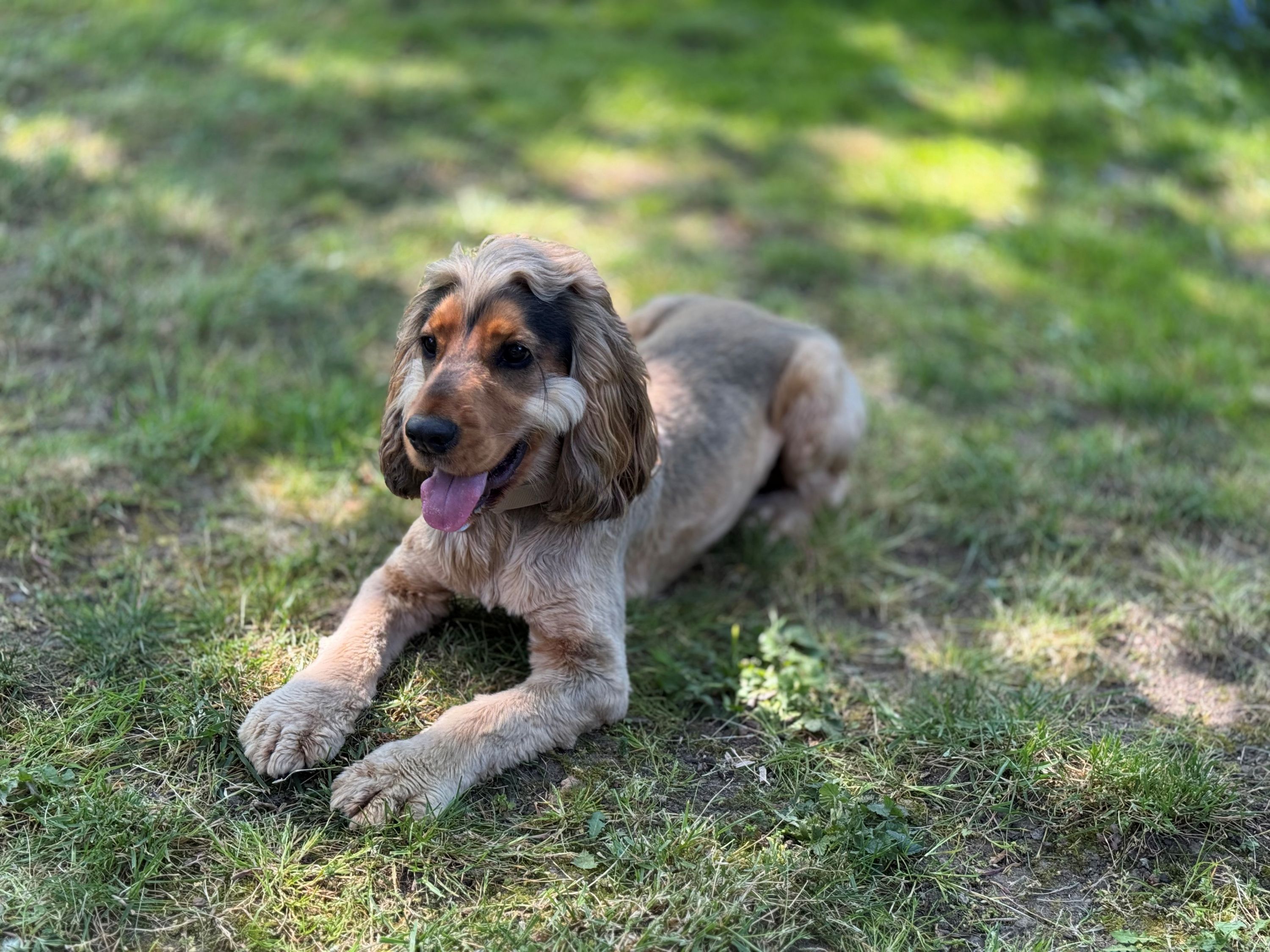
Middi has been trained to be a school dog.
Why did we get a school dog?
The value of pet therapy is widely accepted as a powerful aid to communication and motivation. Research has shown that companion dogs can improve the well-being of children reducing their anxiety levels by making the school environment happier and a more enjoyable place to be. Children can benefit educationally and emotionally; a dog can motivate and encourage their participation, increase their understanding of responsibility, develop empathy and nurturing skills and improve their behaviour and self-esteem. Children cannot fail in any way in their relationship with a dog; they do not judge or condemn and offer unconditional affection. Children will learn the principles of good pet ownership and be taught how to handle dogs safely and responsibly; they will take great enjoyment from interaction with the dog.
The rationale to have a school dog was as follows: to have a dog that the children could learn how to care for, interact safely around and also benefit their social and emotional development.
Benefits of having school dogs
It is accepted that interacting with animals is not appropriate for all children but that for some it has the potential to provide many positive benefits.
Some of the benefits of having a school dog include:
- A calming effect on pupils, particularly those with behavioural or learning difficulties
- Encouraging expression and participation in quieter children
- Teaching children to nurture and respect life
- Motivating children to think and to learn, as most children have a high level of natural interest in, enthusiasm for and enjoyment of animals
- Fostering a sense of responsibility
When Middi is in school, their main residence will be the office area, which is secure and separate from the classrooms, and will only work closely with the children who have expressed a wish to spend time with him. Whilst moving around the school, the dog will be kept on a lead. We understand that it is not possible for all families to have a family dog, therefore we hope that this is an opportunity for children to ‘share’ in a dog and gain from a relationship and contact on a regular basis.
Frequently asked questions/concerns
The school has a 'no dogs' policy
Our school does have a ‘no dogs’ policy and dogs are not allowed anywhere on the school site. However, there is a risk assessment in place for Middi and the school has a policy specifically for him. Middi has undergone training and will be on a lead or under control at all times when moving around the school property. He will always be accompanied by an adult who knows him well and children’s time with him will be carefully monitored and supervised.
Safety around the dog
There will always be a designated staff who is taking responsibilityfor the dog. Children will only have contact with the dog with a supervised adult. When moving around the school, the dog will be under strict control or on a lead.
What about the children who have allergies around a dog?
Middi is a Cocker Spaniel, a breed known for being sociable, gentle and well-tempered. He is regularly groomed and maintained to minimise loose hair and dander, which helps to reduce the likelihood of allergic reactions.
We are mindful that some children may have allergies, and therefore:
- Contact with Middi is always voluntary
- Children with known allergies will not be required to interact with him
- Good hygiene practices (e.g. handwashing after contact) will be in place
- Our aim is to ensure that all children feel safe and comfortable, whether or not they choose to engage with the dog.
What about the children/ staff who have a fear for dogs?
One of the aims of introducing a dog into the school is to reduce the number of children who have a fear of dogs by teaching them how to care for and behave safely around them. If a child has a fear of dogs, we will ask parents to inform us of this so that we can be aware and work with the parents / child to build up their confidence so that they feel safe.
Health and well-being of the dog
Middi has been receiving all vaccinations, be wormed, groomed and cared for. Pet insurance is in place to insure if he is ill the dog will receive immediate medical attention. If Middi were to be taken ill, he would not attend school and would be cared for at home until it was fit to return to school.
Hygiene
There will be a designated area for the dog to toilet if necessary which will be away from the children at the back of the school site. The staff in charge of the dog will ensure that this is cleared away appropriately. If the school dog toilets when out on the school site, staff members will clear this away appropriately leaving no trace on the ground, cleaning the area with disinfectant if needed. If children have stroked the dog, they will be taught to wash their hands afterwards.