Mental Health & Well-being (RHE)
“PSHE education gives pupils the knowledge, skills, and attributes they need to keep themselves healthy and safe and to prepare them for life and work in modern Britain…. When taught well, PSHE education helps pupils to achieve their academic potential, and leave school equipped with skills they will need throughout later life.”
PSHE Association
What does the RHE curriculum teach about LGBTQ issues?
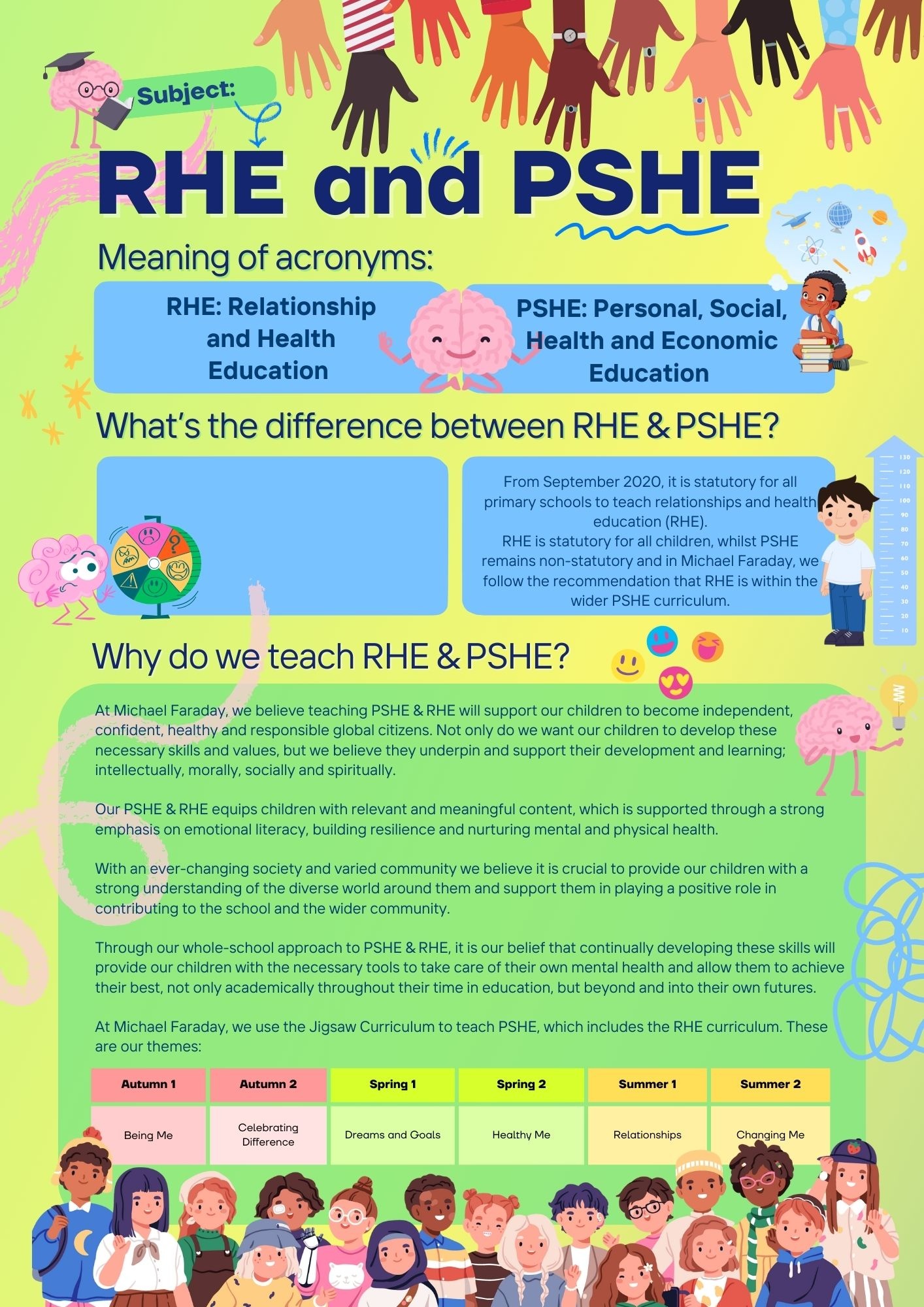
Click on the link below to see the information leaflet written to parents and carers, with information about the LGBTQ content of the Jigsaw materials and how they support the school to meet its statutory obligations. If you would like to discuss this programme further, please contact the school to make an appointment with Sarah (Deputy) and/or Laura (PSHE leader).
How do we support children's well-being and mental health?
Our vision helps children understand and value how they fit into and contribute to the world. At Michael Faraday there is a strong emphasis on emotional literacy, building resilience and nurturing mental and physical health.
We have a caring and inclusive learning environment; we create safe and supportive spaces within the school where children feel comfortable expressing themselves and confident to seek help should they need support.
Support/strategies that we have in place at Michael Faraday:
- Jigsaw scheme of work embedded, which incorporates mental health education into the curriculum. The content of the lessons helps to raise awareness of mental health, reduce stigma and help children to understand and manage their mental health and well-being. The lessons also include mindfulness, which allows children to advance their emotional awareness, self-regulation and concentration.
- Training staff to recognise signs of mental health issues and providing them with strategies to respond appropriately.
- Child counsellor providing targeted support (4 days a week).
- In every class there is a full-time Teaching Assistant to support the children's academic and emotional needs. We also have additional support staff to support children with more complex needs.
- A school dog - children interacting with a friendly and non-judgmental school dog can provide emotional support to them.
- Buddy system: Year 6 children acting as a mentor and 'buddy' for Reception children.
- 2 trained ELSAs (Emotional Literacy Support Assistants)
- 2 SENCO (each 3 days a week and non-class based) as well as a non-class based deputy
- Events to raise awareness such as kindness week, anti-bullying week, Children’s Mental Health Week.
- Confidential school reporting system to ensure that SLT are aware of concerns/incidents and follow up is good practice in responding to children’s well-being.
Support from outside agencies:
- Southwark Educational Psychology Service
- NHS CAMHS
- Family Early Help Service
- 1st Place Child and Family Centre
- Mentivity
- The Nest (Groundwork) Wellbeing Service
- Autism Support Team, who provide support and resources for the wellbeing of pupils with ASD
- SaLTs also support with communicating feelings e.g. Zones of Regulation
- Our partners London PE & School Sports Network are brilliant at providing support and resources for health & wellbeing
Supporting my child's mental health - helping my child to feel loved
As parents, we often show love in the way that feels natural to us - for example, using lots of praise and encouragement. However, our children may experience love differently. A child who hears kind words may still be seeking more time together or physical closeness. Taking time to reflect on different “love languages” can help us better understand what makes our child feel truly valued and secure.
There are five main ways children tend to experience love:
- Words of affirmation – kind, encouraging words
Examples: praising effort (“I’m really proud of how hard you tried”), leaving a kind note in their bag, telling them what you enjoy about them - Quality time – focused time together without distractions
Examples: playing a game together, reading a book at bedtime, going for a walk or having a chat without phones or interruptions - Physical touch – closeness and affection
Examples: hugs, sitting close together, a reassuring hand on the shoulder, cuddling during story time - Acts of service – helping and supporting them
Examples: helping them with a tricky task, fixing a toy, preparing their favourite meal, supporting them with homework - Receiving gifts – thoughtful tokens that show you are thinking of them
Examples: a small treat, a note or drawing, picking up something you know they like, making something together
Children’s preferences are still developing and there is no fixed rule - most children benefit from a balance of all five. However, noticing what your child responds to most can be helpful. When children feel loved in ways that matter to them, it can strengthen their sense of security, confidence and wellbeing.
Healthy School
In recognition of the work we are doing to be a healthy school, Michael Faraday has achieved Healthy School Silver Award.